


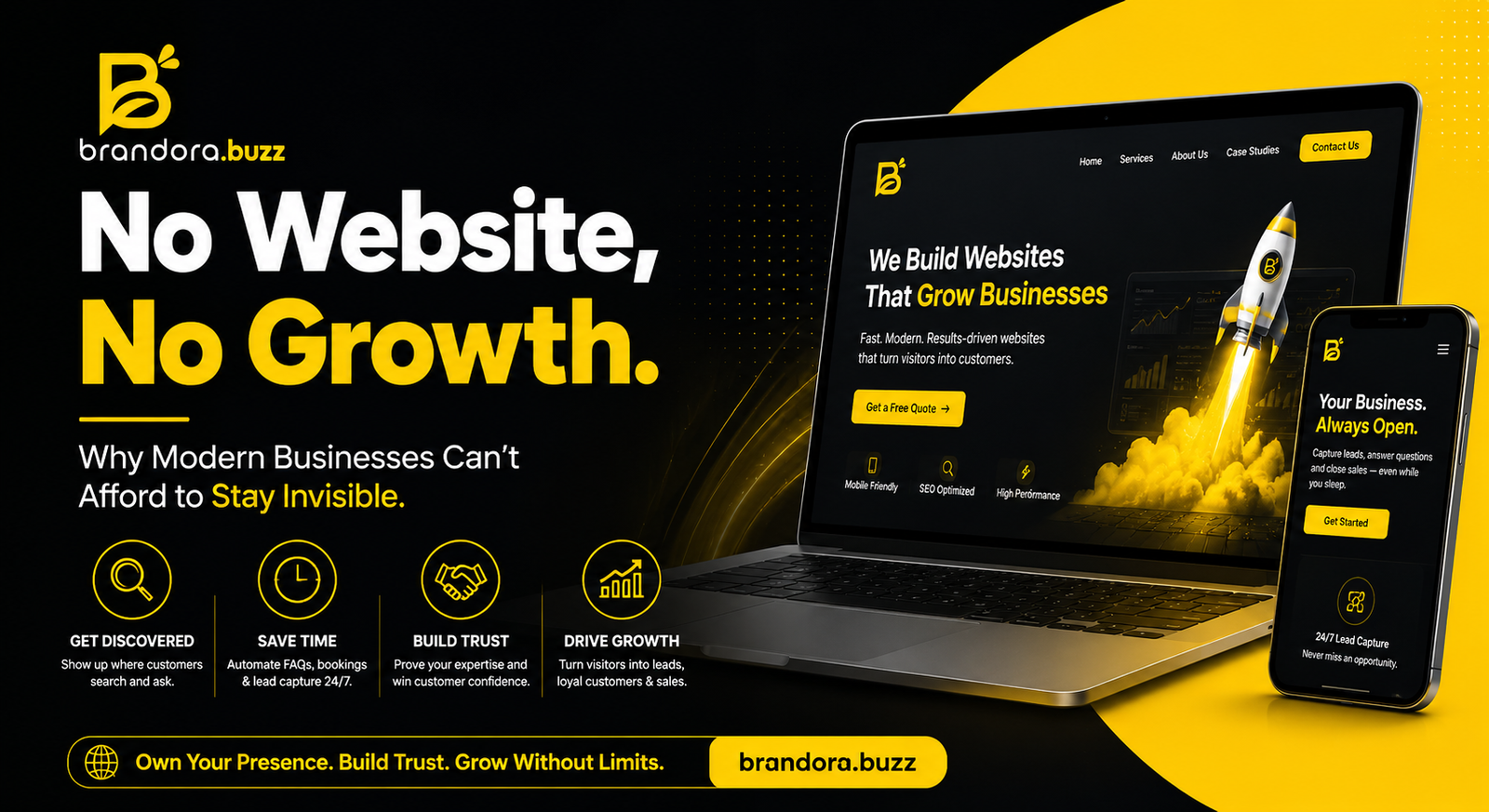
The Cost of Being Invisible
Think about the last time you needed a product or service.
Did you browse through dozens of social media profiles?
Probably not.
You searched Google, asked an AI assistant, looked at online reviews, or requested recommendations from a chatbot. Today’s customers don’t just search—they ask. They expect immediate answers, trusted recommendations, pricing information, and proof that a business can solve their problem.
That shift has changed how businesses are discovered.
Search engines are no longer the only gateway to new customers. AI-powered assistants like ChatGPT, Gemini, Copilot, and Perplexity increasingly recommend businesses directly within conversations. These systems don’t randomly pick companies—they rely on publicly accessible, structured information from websites and other trusted sources.
This is where Generative Engine Optimization (GEO) enters the picture.
Unlike traditional SEO, which focuses on ranking webpages in search results, GEO helps AI systems understand:
- What your business does
- Where you operate
- Which services you provide
- Who you help
- Why customers trust you
A properly built website with structured data (Schema markup), clear service pages, and authoritative content becomes the foundation AI systems use to understand your business.
Without one, you’re asking AI to recommend a business that has little or no structured information available.
In simple terms:
If your business doesn’t have its own website, you dramatically reduce the chances of being discovered by both search engines and AI recommendation systems.
Your competitors aren’t just competing for Google rankings anymore.
They’re competing for AI recommendations.
The Small Business Trap: Living on Rented Digital Land
Many small businesses believe they already have an online presence because they have:
- Facebook Page
- Instagram Profile
- Google Business Profile
- WhatsApp Business
- TikTok
These platforms are valuable.
But there’s one problem.
You don’t own any of them.
You’re building your business on rented digital land.
Tomorrow, any of these platforms can:
- Change their algorithm
- Reduce your organic reach
- Suspend your account
- Limit visibility
- Experience outages
- Change pricing
- Introduce new restrictions
Years of customer relationships can become harder to reach overnight.
Your website is different.
It’s a digital asset that you own and control.
Nobody can suddenly reduce your visibility because an algorithm changed.
Nobody decides who gets to see your services.
Nobody inserts competitors next to your content.
That’s the difference between renting attention and owning your marketing foundation.
Your Website Should Save Time—Not Create More Work
Many business owners imagine websites as something they constantly need to update.
Modern websites work the opposite way.
A well-designed website becomes your 24/7 administrative assistant.
Instead of answering the same questions repeatedly, your website can automatically handle:
- Business hours
- Pricing information
- Service descriptions
- Frequently asked questions
- Appointment scheduling
- Quote requests
- Contact forms
- File uploads
- Customer inquiries
Imagine removing dozens of repetitive phone calls every week because visitors already found the answers online.
That’s not just marketing.
That’s operational efficiency.
Every minute saved answering routine questions is another minute spent serving customers.
You Don’t Need a Huge Website

One of the biggest myths is that professional websites must contain hundreds of pages.
For most local businesses, that’s simply unnecessary.
A modern website is often just:
- Home
- Services
- About
- Contact
- Optional Blog or Portfolio
That’s it.
Instead of building something enormous, focus on building something that is:
- Fast
- Mobile-friendly
- Easy to navigate
- Secure
- Optimized for local search
- Designed around customer actions
A clean, lightweight website built using modern modular frameworks often performs better than an oversized site packed with unnecessary features.
Your customers don’t reward complexity.
They reward clarity.
The B2B Reality: Winning the Anonymous “Day-One” Shortlist
Business-to-business buying has changed dramatically.
Long before a prospect schedules a demo or speaks with your sales team, they’re already researching.
In many industries, buyers complete 60–80% of their evaluation process independently before contacting a vendor.
By the time you receive an inquiry, the customer has often:
- Compared competitors
- Read reviews
- Evaluated pricing
- Studied implementation options
- Looked for customer success stories
- Assessed industry expertise
This creates what many marketers call the “Day-One Shortlist.”
It’s the list of vendors buyers create before your sales team even knows an opportunity exists.
If your business isn’t represented by a professional, authoritative website, you may never make that shortlist.
The deal isn’t lost after the sales meeting.
It’s lost before you’re ever invited to the conversation.
Your Website Becomes the Trust Center
Unlike social media, B2B buyers need depth.
They rarely make purchasing decisions based on a single post.
They want evidence.
Your website becomes the central location where decision-makers validate your expertise through:
- Detailed case studies
- Industry-specific landing pages
- Customer success stories
- White papers
- Technical documentation
- ROI calculators
- Product comparisons
- Frequently asked questions
- Certifications
- Team expertise
Every piece reduces uncertainty.
Every page builds confidence.
Every resource moves buyers one step closer to contacting your business.
Long Sales Cycles Need Long-Form Content
B2B purchases rarely happen overnight.
Sometimes buying decisions take:
- Weeks
- Months
- Multiple stakeholders
- Several approval levels
During that time, prospects repeatedly revisit your website.
They compare information.
Share links internally.
Download resources.
Evaluate your credibility.
Without a website acting as your central knowledge hub, your sales process becomes slower, more repetitive, and less scalable.
Instead of answering the same questions individually, your website answers them once—for every future prospect.
Small Local Business vs. B2B Provider
| Business Type | Primary Website Goal | Must-Have Feature | Biggest Risk of Having No Website |
|---|---|---|---|
| Small Local Business | Generate calls, bookings, and walk-in customers | Fast mobile experience, local SEO, contact information, online booking, customer reviews | Losing customers to competitors who are easier to find and contact |
| B2B Provider | Build authority, educate buyers, and generate qualified leads | Case studies, ROI calculators, white papers, detailed service pages, lead capture forms | Being excluded from buyers’ research process before sales conversations even begin |
Your Website Is an Asset That Appreciates
Unlike paid advertising, which stops producing results the moment you stop spending, a quality website continues working around the clock.
Every improvement you make compounds over time.
New blog articles expand your visibility.
Additional case studies increase trust.
Fresh testimonials strengthen credibility.
Better SEO attracts more qualified visitors.
Helpful resources reduce repetitive customer questions.
Over time, your website becomes a growing marketing asset that delivers increasing value instead of a recurring expense that disappears after each billing cycle.
Actionable Next Steps
You don’t need perfection.
You need a website that clearly answers one question:
Why should someone choose your business?
Every Modern Website Should Include Above the Fold
- A clear value proposition that explains exactly what you do and who you help
- An obvious Call-to-Action (Book a Call, Get a Quote, Schedule a Demo, Request Pricing)
- Fast loading speed on mobile devices
- Hyper-local SEO signals, including your service area, location, and contact details
- Trust indicators such as reviews, certifications, client logos, or years of experience
- Simple navigation that helps visitors find answers in seconds
- Multiple contact options, including forms, phone numbers, and email
- Clear messaging that focuses on customer problems rather than company jargon
If you can check every item on this list, you’re already ahead of many competitors.
Final Thoughts
A website isn’t just another marketing channel.
It is the foundation that connects search engines, AI assistants, customers, and sales opportunities.
For local businesses, it reduces repetitive administrative work, captures leads around the clock, and provides a stable online presence that no social platform can take away.
For B2B companies, it earns trust long before the first sales conversation, supports complex buying journeys, and helps secure a place on the buyer’s shortlist before competitors even know an opportunity exists.
The businesses that thrive over the next decade won’t simply be the loudest—they’ll be the easiest to discover, the easiest to trust, and the easiest to do business with.
A website isn’t an operational expense. It’s a scalable employee that never sleeps, never misses a lead, never takes a day off, and keeps creating opportunities long after the work of building it is done.

Excellent article. My website answers most customer questions now, and it has definitely reduced the number of repetitive phone calls.
A website isn’t just about getting traffic—it’s about building credibility. This article explains that really well.
The point about AI recommending businesses instead of just search results is something I hadn’t considered. Great explanation!
Do AI tools like ChatGPT actually use website content when recommending businesses?
Yes. A website helps AI understand and recommend your business.
Hi There,
I came across your website and noticed you’re running a WordPress site — great setup.
I just wanted to reach out because we’ve been helping WordPress site owners like you reclaim hours every week by automating the repetitive stuff that quietly eats into your day:
WordPress automation — auto-publishing, content scheduling, plugin updates, backups, and form-to-CRM workflows
Chat automation — 24/7 AI chatbots that answer visitor questions, qualify leads, and book appointments while you sleep
Social media chat automation — auto-replies and DM flows across Instagram, Facebook, and WhatsApp so no lead goes cold
Lead follow-up sequences — instant responses the moment someone fills out a form or contacts you
Most of our clients save 10–15 hours a week within the first month.
We’d love to take a quick look at your current setup and tell you exactly where automation could make the biggest difference — no fluff, no hard sell.
Get your free 15-minute audit here →
Or just reply to this email and we can sort out a time.
WhatsApp works too: wa.link/45wwsq
Best,
Alex
AutoHandy Team
alex@autohandy.co
[Timestamp: 2026-07-04 16:02:46]